
Guestrooms & Wellness / Guide 04
Hospitality Interior Design Abu Dhabi: Guestroom Layouts from Entry to Bed
Plan an Abu Dhabi hotel guestroom around arrival, luggage, sleep and daily routines, with practical storage, clear circulation and usable controls.
At a glance
Plan a guestroom as a sequence: enter, set down belongings, unpack, wash, rest and leave. Give each activity a usable place without interrupting the path through the room. Confirm the arrangement with luggage, open drawers and occupied furniture, then coordinate lighting and controls.
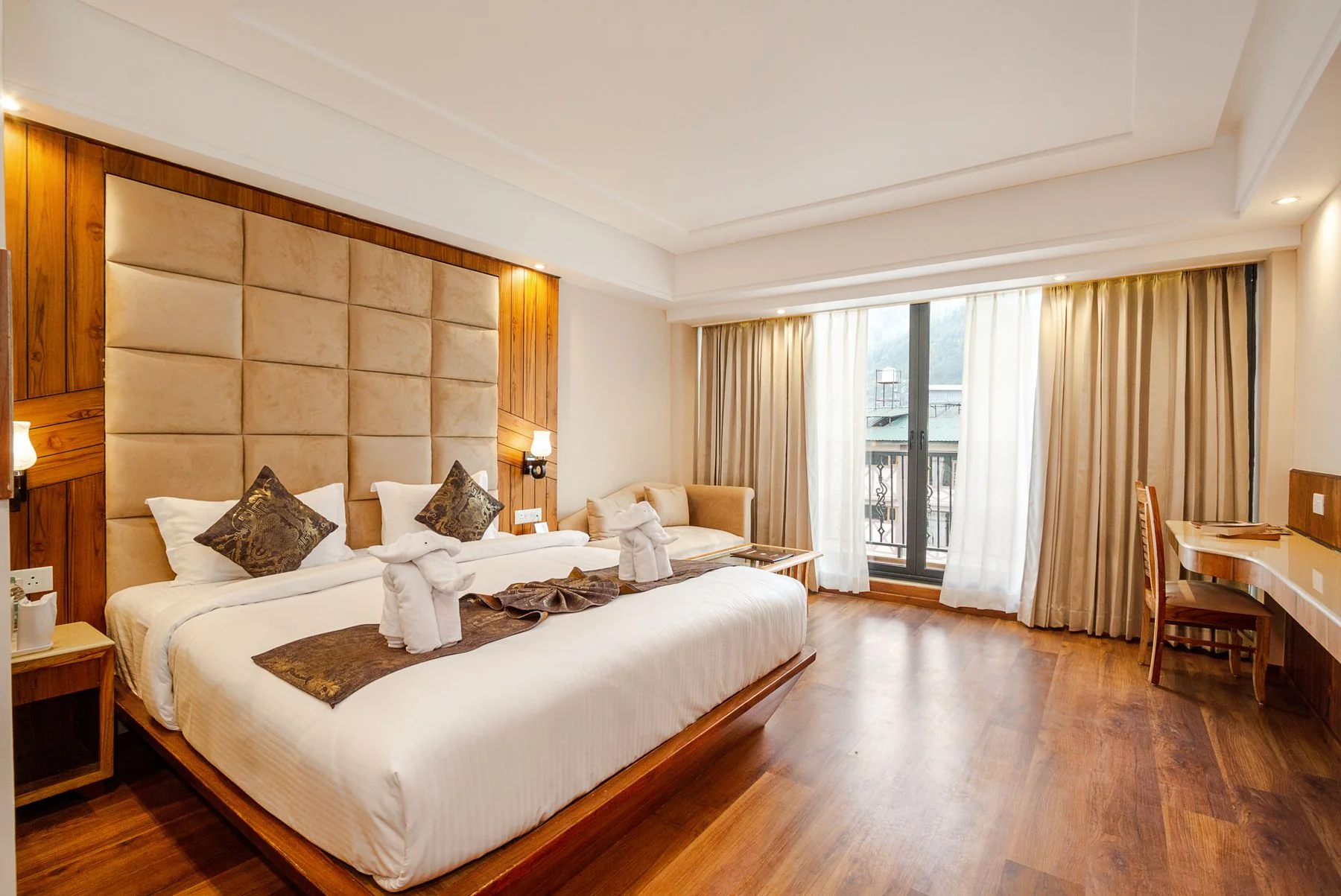
A guestroom can look generous in a photograph yet become awkward as soon as two suitcases are opened. Good hospitality interior design in Abu Dhabi considers the occupied room, not just its empty composition. The aim is an intuitive arrangement that helps unfamiliar guests settle in without moving furniture or searching for basic functions.
Resolve the first few steps
At the entrance, identify where a guest can put a key card, phone and bag. Check the door swing against wardrobes, the bathroom door and luggage storage. A shallow ledge can be useful, but only if it does not reduce the required route or become a protruding corner.
Consider what is visible when the room door opens. The layout can offer a degree of privacy to the bed and bathroom without creating a dark, narrow arrival corridor. Test this view from the corridor as well as from inside the room.
Give luggage a deliberate home
Decide where one or two suitcases will be opened and whether they can remain accessible during the stay. A luggage bench that fits only a small bag may look tidy but push larger cases onto the bed or floor. Compare the arrangement with the guest profile and expected length of stay.
Keep frequently used storage easy to understand. Guests should not need to inspect several decorative panels to find a wardrobe or minibar. Review handles, internal lighting and the space needed to use drawers while another person passes.
Organise the bed and its immediate surroundings
Check both sides of the bed for practical bedside surfaces, charging and lighting controls. The room should support different routines: one guest reading while another rests, or someone getting up without switching on every light. Coordinate these actions in a control schedule that staff can also explain simply.
Allow the bed to remain the visual focus without forcing every other function onto the same wall. Mirrors, televisions and glossy finishes should be reviewed from the pillow position so that reflections and unwanted light do not become an overlooked part of the sleeping experience.
Make secondary furniture earn its space
A desk, dining surface or lounge chair should respond to the hotel's proposition. If a compact room is aimed at short stays, a well-positioned multiuse surface may be more useful than several small pieces. If work is expected, test a laptop, chair movement and task lighting together.
Do not describe a decorative ledge as a workspace unless it is comfortable to use. Equally, a lounge chair should not block wardrobe access whenever someone sits in it. Show these occupied conditions on the plan before furniture sizes are approved.
Run an arrival-to-departure trial
Test a mock-up room with the actual accessories, not just major furniture. Place the kettle, cups, directory, waste bin and ironing equipment where the operator expects them. Their combined footprint often changes the usefulness of a beautifully drawn surface. Invite housekeeping to make the bed and clean the room during the review.
- Enter with bags while the wardrobe and bathroom doors are in use.
- Try bedside lighting and blackout controls without instructions.
- Check that sockets remain accessible behind installed furniture.
- Leave space for cleaning tools and routine maintenance access.
Common questions
Should the bed always face the window?
No. Choose its position by comparing circulation, privacy, views, glare and services. A window-facing bed is valuable only when the rest of the room remains practical and comfortable.
Can a guestroom use one table for work and dining?
Yes, if its height, chair, lighting and location support both uses. Test the real equipment and meal setup, and provide another sensible place for personal belongings.