
Dining & Events / Guide 08
Hospitality Interior Design Abu Dhabi: Café Counters and Queue Design
Plan an Abu Dhabi hotel café with a clear order-to-collection journey, practical counter equipment, comfortable waiting and accessible service.
At a glance
A café counter should make ordering, paying, collecting and clearing easy to distinguish. Map the guest queue and the staff production sequence together. Confirm equipment, storage and utility connections early, then test the arrangement during a realistic rush rather than an empty-room walkthrough.
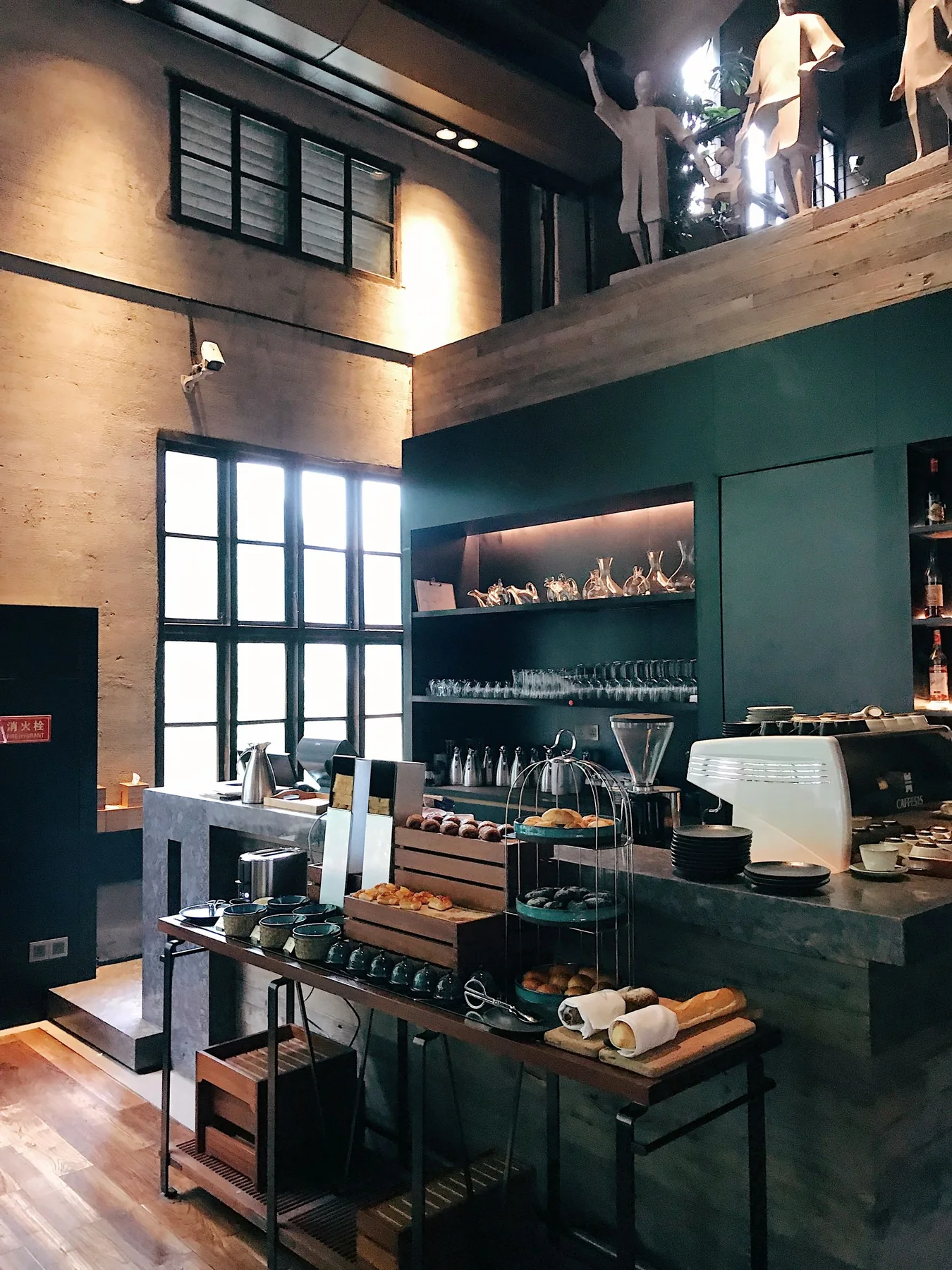
A hotel café often serves several audiences at once: guests heading out, visitors meeting friends and people settling in with a laptop. Their needs overlap at the counter. Hospitality interior design in Abu Dhabi can help by giving each stage of the transaction a clear place, reducing uncertainty without filling the space with instructions.
Make the sequence visible
Decide where customers read the menu, order, pay and collect drinks. If these activities share one small surface, a person waiting for a coffee can unintentionally block the next order. Use the counter arrangement, equipment and concise signage to explain the sequence before a customer reaches the front.
Keep menu information readable from the decision point. A display positioned behind a pendant light or facing direct window glare may look integrated but be difficult to use. Test it from the queue with the actual lettering and lighting.
Design the staff workflow alongside the queue
Map the preparation of the most common drinks and food items with the operator. Locate ingredients, cups, refrigeration, washing and waste according to that sequence. Equipment footprints are not enough: include working space, open doors, ventilation and maintenance access.
Coordinate the counter with foodservice, electrical and plumbing specialists before finishes are approved. Moving a coffee machine later can affect water, drainage, power and the height of surrounding surfaces. A neat guest-facing elevation should emerge from a workable production arrangement rather than concealing an unresolved one.
Keep waiting outside the main route
Provide a recognisable collection area with room for people to pause without standing in the order queue. Consider where companions, pushchairs and luggage will wait. If the café is beside the hotel entrance or lifts, these small gatherings should not interrupt the wider circulation.
A queue does not always need permanent barriers. Furniture positioning, floor space and staff guidance may be sufficient for ordinary trading. Test the busiest anticipated period, then decide whether movable queue management is needed and where it will be stored when not in use.
Offer approachable service and useful seating
Plan a service position that can accommodate different reach and mobility needs, with dimensions checked against the applicable requirements. Make the collection process equally usable; an accessible order point is incomplete if drinks are handed over only at a difficult high ledge.
Choose nearby seating to suit the café's purpose. Brief takeaway waits need a different arrangement from longer visits. For laptop-friendly seats, coordinate tables, lighting and charging. Keep the remaining settings available for conversation and short stays rather than assuming every customer wants a workstation.
Include clearing and replenishment
Decide whether guests return trays or staff clear tables. Position returns so they are easy to find without dominating the entrance or crowding drink collection. Keep waste, used items and incoming supplies coordinated with the operating and hygiene procedures.
Run a trial with several orders at once. Include a payment query, an unfinished drink and a delivery of clean cups. These ordinary interruptions show whether the counter has enough temporary landing space and whether one staff member can assist a customer without stopping the entire sequence.
Common questions
Should collection always be separate from ordering?
Not always. A very small operation may combine them successfully, but the arrangement should be tested against preparation time and demand. Separate points become useful when waiting customers obstruct new orders.
When should café equipment be confirmed?
Before the counter is detailed for manufacture. Obtain equipment information and service requirements from the operator and suppliers, then coordinate them with the technical consultants and maintenance access.