
Arrival & Public Spaces / Guide 19
Hospitality Interior Design Abu Dhabi: Wayfinding That Guests Understand
Create clear wayfinding for Abu Dhabi hotels through consistent names, well-placed signs, readable information and intuitive routes between facilities.
At a glance
Wayfinding starts with a legible layout and consistent destination names. Place concise information where guests make decisions, then confirm arrival at the destination. Coordinate signs with lighting, accessibility and operations, and test the journey with someone who has not seen the plan.
Guests rarely study a hotel as a complete building. They look for the next useful cue: reception, a lift, their room or breakfast. Hospitality interior design in Abu Dhabi should support these small decisions through space and information together, so that signs clarify the route instead of compensating for every unresolved layout choice.
Create a consistent naming system
Agree the names of rooms, venues and facilities before producing signs. The same destination should be described consistently on booking information, digital screens, printed material and staff instructions. A guest may not know that a branded venue name refers to the hotel's breakfast restaurant.
Where both a brand name and a functional description are useful, establish how they appear together. Coordinate language requirements and translations with qualified contributors. Keep a controlled schedule so that later changes do not leave different versions of a destination name around the property.
Place information at decision points
Walk from each main arrival point and identify where a guest must choose a direction. Signs belong before or at those choices, where they can be seen in time to act. A sign immediately after a turning may be accurate but still unhelpful.
Use a hierarchy rather than listing every facility on every panel. Give the information needed for the next step, then provide confirmation further along the route. At the destination, make identification clear so guests know they have arrived instead of continuing to search.
Make the architecture contribute
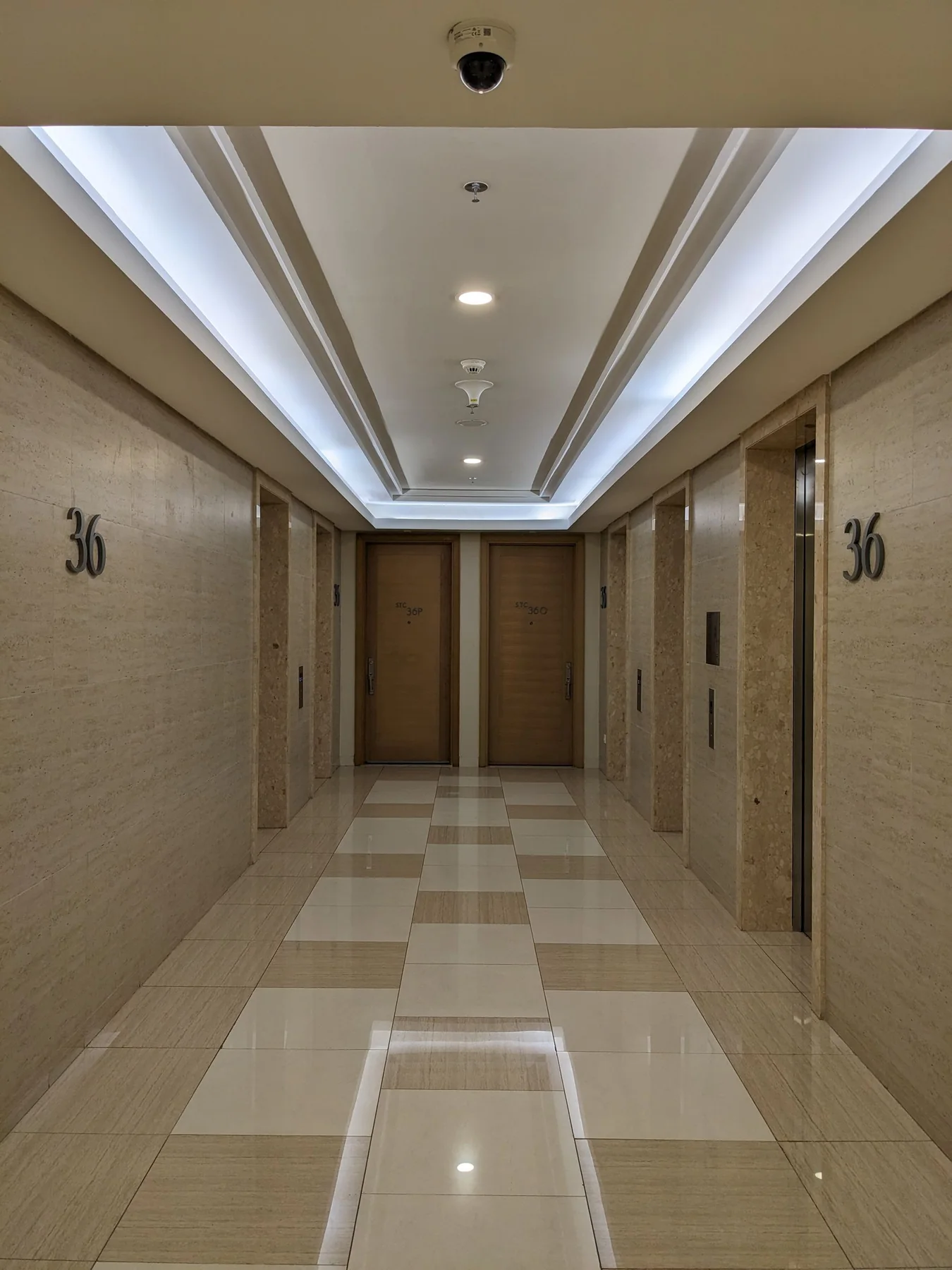
A visible reception desk, a well-lit lift lobby or a consistent doorway treatment can make the building easier to understand. Review sightlines before adding more signage. Furniture, plants and promotional displays should not hide the features that help guests orient themselves.
Keep decorative variations compatible with the overall system. Distinctive floors or wings can assist recognition, but avoid relying only on colour or artwork. Guests may approach from another direction, encounter different light conditions or need another form of information to navigate comfortably.
Check readability in the installed setting
Review lettering, contrast, mounting position and viewing distance with the wayfinding and accessibility specialists. Reflective materials can reduce readability even when the graphic design looks clear on screen. Test signs under the lighting conditions in which guests will actually use them.
Coordinate any required tactile, audible or other provisions as part of the same system. Keep statutory and emergency signage under the appropriate specialist review; decorative branding must not compromise required information. The general guest wayfinding scheme should complement those provisions rather than imitate or compete with them.
Include temporary information and testing
Events, maintenance and venue changes create temporary messages. Design a consistent method for displaying them, with agreed locations and removal responsibilities. An accumulation of improvised signs can make the permanent system harder to follow.
Before opening, ask someone unfamiliar with the property to find a room, restaurant and public washroom without coaching. Observe hesitation and wrong turns. Adjust the layout or information where needed, then repeat only the affected journeys. Keep a record of the approved sign locations so future furniture moves do not obscure them.
Common questions
Can digital screens replace all permanent signs?
Not necessarily. Screens are useful for changing information, but the core route should remain understandable and meet applicable requirements. Consider visibility, power interruptions and guests who prefer simple static information.
When should wayfinding be designed?
Begin during layout planning, then coordinate details as destination names, lighting and finishes develop. Leaving it until the end can produce signs that conflict with architecture or compensate poorly for hidden routes.